Named-site diligence at operational depth, in days.
AISIGINT Audit pressure-tests a named AI datacenter site against the questions a corridor narrative cannot answer: sanctioned grid capacity, phased energization, and zoned campus fit at AI density. The output is a quantified GO, CAUTION, or NO-GO with an evidence chain an IC can quote, in days.
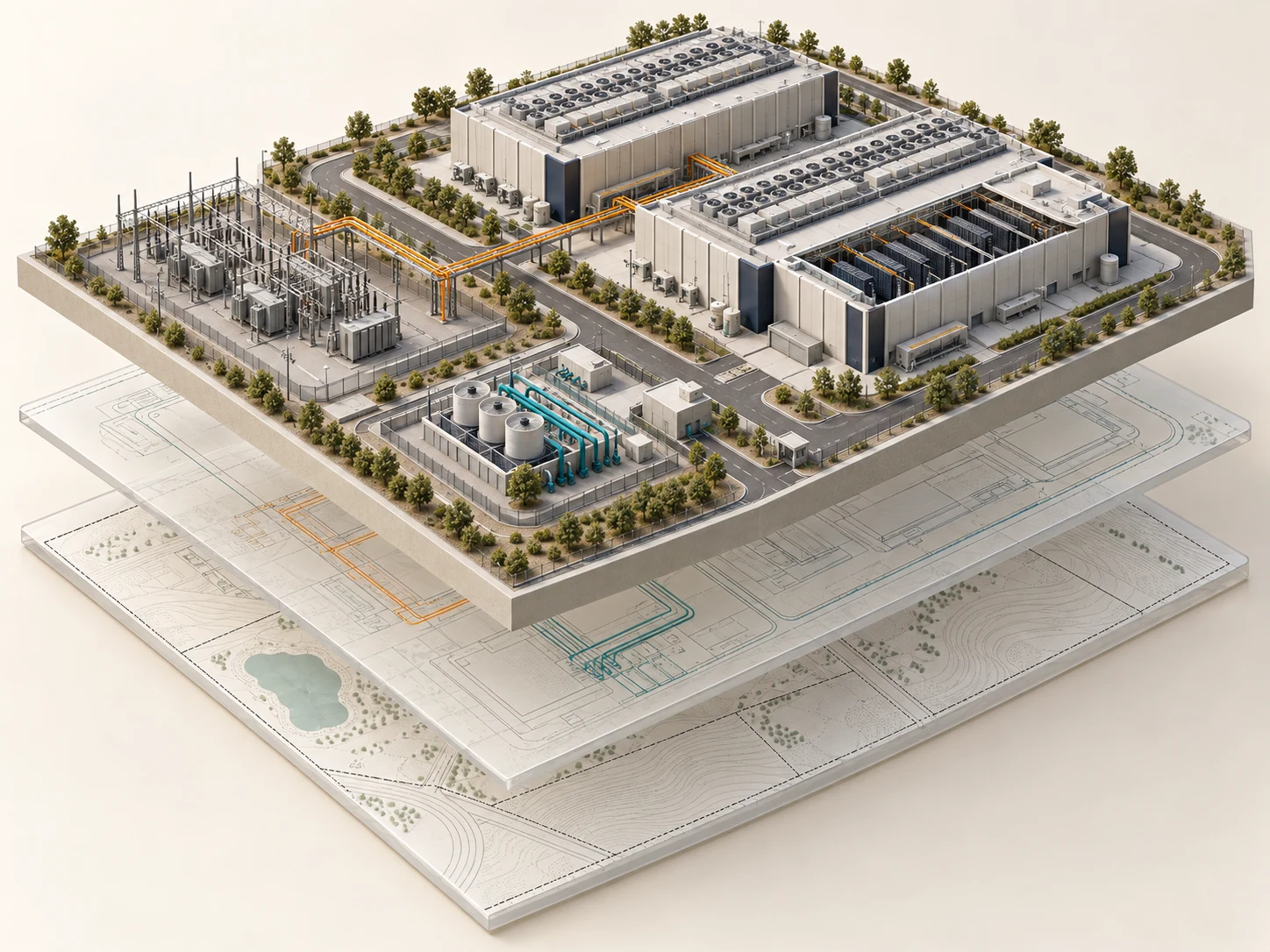
Sites are being committed faster than diligence can keep up.
Capital is moving on corridor narrative. Sponsor claims, utility-commitment assumptions, and grid proximity arguments are taking the place of evidence. AISIGINT Audit closes that gap in days, with primary-source evidence and a decision signal an IC can quote, on the questions an AI campus actually raises.
Pre-IC questions are technical.
Workload mix, density, cooling, parcel fit, grid path, water route. Corridor evidence does not answer these on a named site.
Grid proximity is not capacity.
A nearby substation is not a utility commitment. Audit separates proximity from validated, energizable capacity using LILO/tap and STU planning evidence.
Days, with a primary-source evidence trail.
Audit runs in days against weeks of advisory cycles. Every claim carries a source rank and a confidence band. The IC reads the evidence, not the narrative.
Four inputs. One named-site Audit.
Every AISIGINT Audit starts with these four inputs. They fix the named site, the capacity target, the power pathway, and the workload the site must support. The engine takes it from there.
Site Coordinate
Lat/long plus polygon boundary for the named parcel.
Target Capacity
Target IT load. Examples: 500 MW, 1.8 GW, phased buildouts.
BTM Power Pathway
Behind the Meter, or Captive Power. Choose Grid, BTM Accelerator, Hybrid, or BTM Primary.
Workload Mix
Balanced, AI-Heavy, Colo, or Custom.
What an Audit puts on the committee table.
Each Audit delivers the layers a committee, lender, or operator needs to commit capital or recommend a transaction. Output is decision-ready, not narrative.
Evidence map
Site, grid, water, access, and hazard evidence mapped in one diligence view with referenced sources.
Decision signal
Pre-IC recommendation with quantified rationale, confidence, and the open items still requiring validation.
Grid validation
Target MW, facility draw, voltage need, route validation, and candidate grid leads with feasibility flags.
Workload sizing
PUE, facility draw, parcel fit, rack counts, cooling mix, and 800VDC adoption across workload scenarios.
Campus fit
Zoned campus building program with per-zone density, anchor allocation, cooling, and floor load.
Phased energization
Power-on sequence, phase gates, critical-path timing, and validation boundaries.
Readiness gates
The documents, approvals, and studies required before a site claim becomes bankable.
Procurement risk
Long-lead equipment, routing, and construction dependencies that can move the power-on date.
A diligence file built for IC, lender, and board.
Explore the analysis behind a named-site decision: infrastructure context, workload sizing, campus fit, and the path to power. Each section connects technical findings to the evidence needed before commitment.
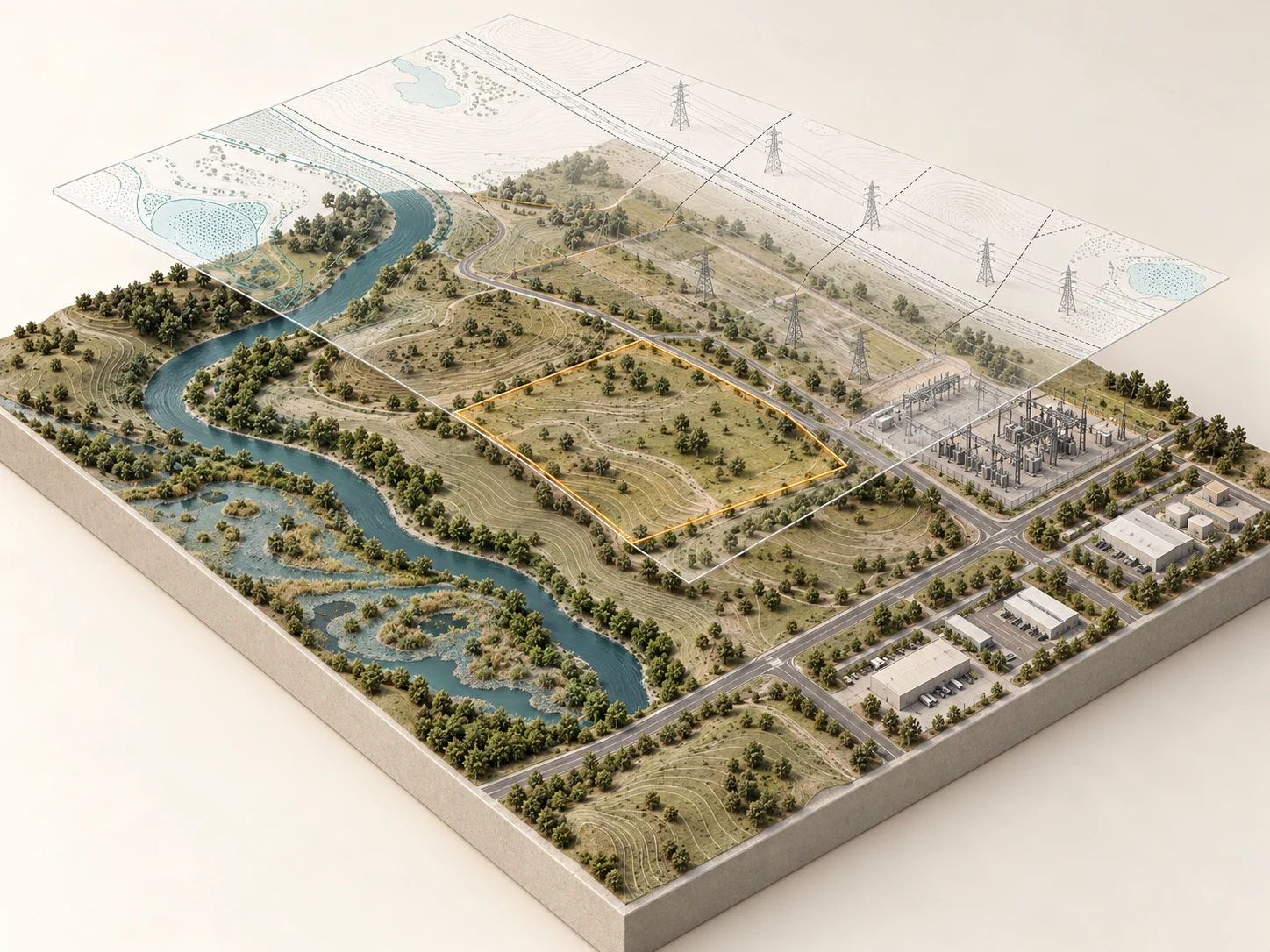
Map the evidence at India scale.
Site location, grid leads, water sources, access constraints, hazard exposure, and constraint flags by severity (seismic, flood, CRZ, EIA) on a single working view, drawing on 1.4M India geospatial features. Every layer cites its source.
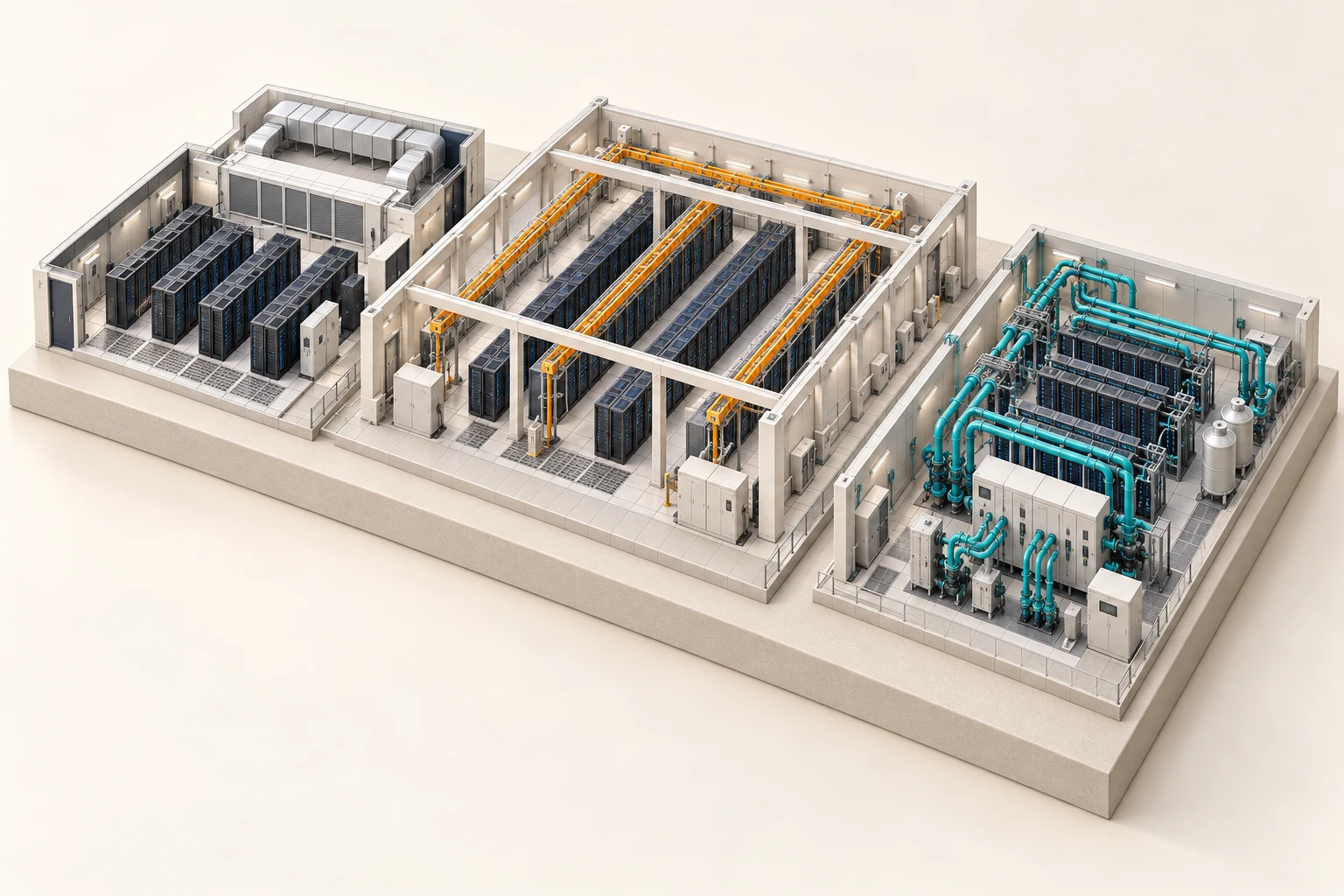
Size power and cooling for the workload.
PUE, facility draw, parcel fit, rack counts, cooling mix, and 800VDC adoption across balanced, AI-heavy, and colo scenarios. The capacity case a committee signs is the one tested at AI density, not generic colo assumptions.

Lay out the campus at AI density.
Total parcel capacity. Per-zone density. Anchor tier. Block design, floor load, and cooling per zone. Tested at AI density and 800VDC, not generic colo assumptions.
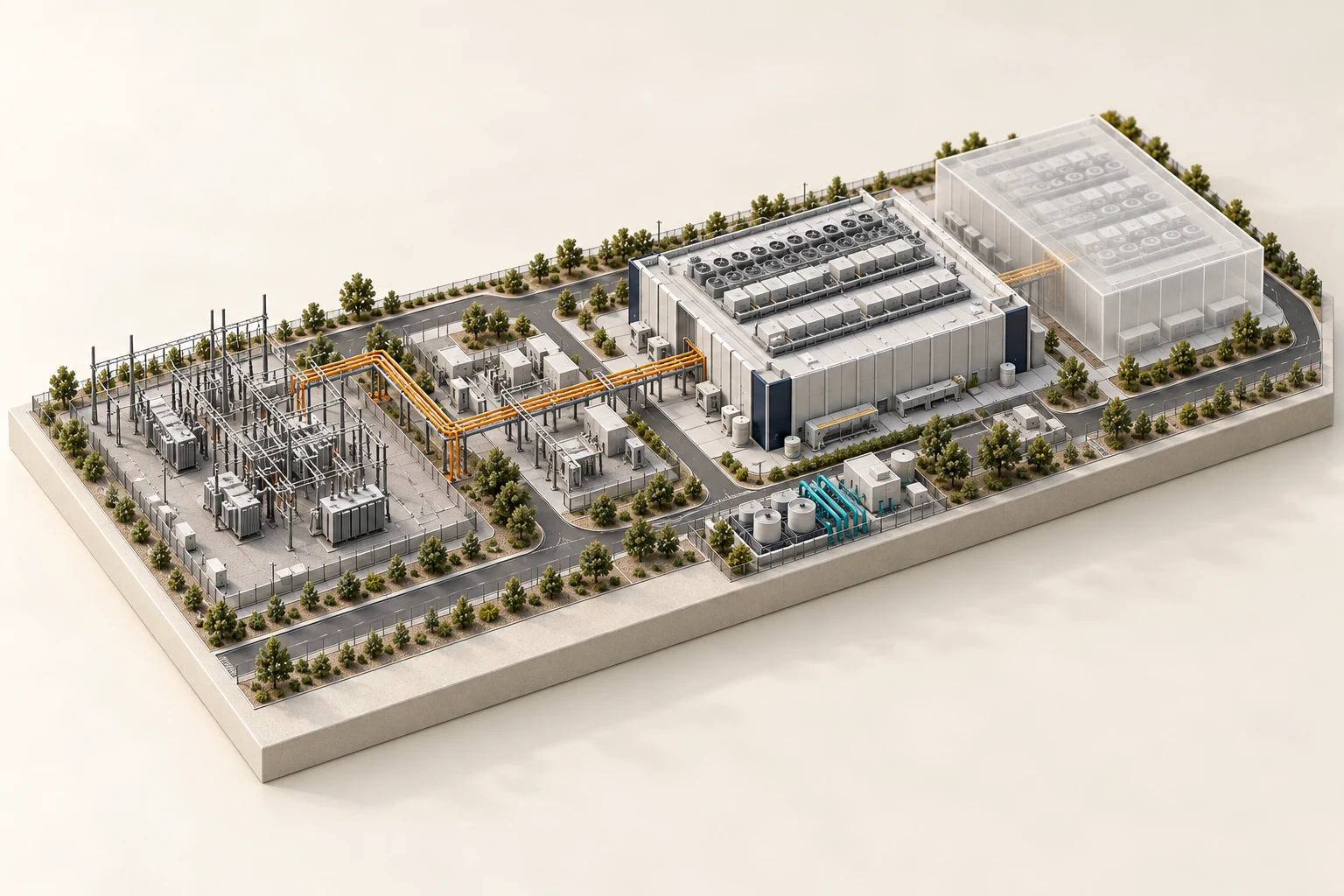
Protect the power-on date.
Phased energization plan with phase gates, critical-path timing, and the validation boundary at each gate. The power-on date is the asset; this is how it is defended.
Audit names what is supported by evidence and what still needs primary-source confirmation.
Audit does not treat mapped infrastructure as sanctioned capacity unless the evidence supports it. The output names what still needs primary-source confirmation before commitment.
Request Audit scoping call- Sanctioned grid capacity (vs. mapped proximity)
- Confirmed water sourcing and allocation
- Permit issuance status (vs. pathway)
- Counterparty contract terms and exclusivity
- Power-on date guarantees
- Construction risk transfer terms
Bring AISIGINT in before the IC date.
Audit runs in days. Brief us with a named site, parcel, grid path, water route, or sponsor claim. Output reads cleanly into the IC memo, the lender pack, and the board paper.